
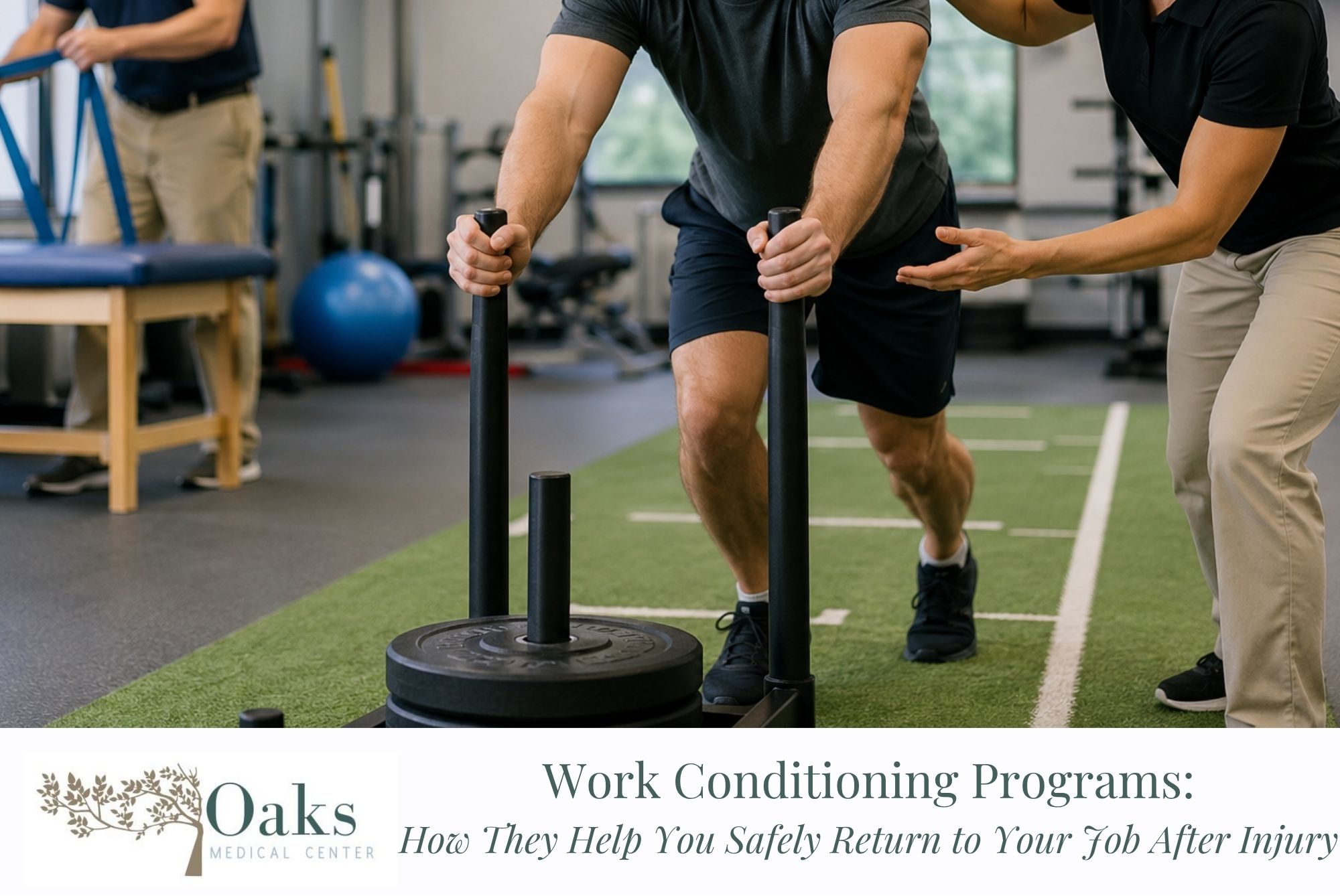
 Recovering from a workplace injury can be physically, mentally, and emotionally challenging. Whether you’ve suffered a strain from repetitive motion, a back injury from lifting, or a surgery-related recovery, returning to work too soon can increase the risk of reinjury and prolong recovery. That’s where work conditioning programs play a critical role.
At Oaks Medical Center in Bryan, TX, patients receive personalized care designed to help them safely rebuild strength, restore mobility, and regain the confidence needed to return to work. Work conditioning is a structured rehabilitation program that bridges the gap between traditional physical therapy and returning to full-duty job performance.
If you or a loved one is recovering from an injury and preparing to return to work, understanding how work conditioning works can help you make informed decisions about your recovery process.
What Is a Work Conditioning Program?
A work conditioning program is a highly specialized rehabilitation program focused on helping injured workers regain the physical abilities and endurance required for their specific job duties. These programs are designed for individuals who have completed traditional medical treatment or physical therapy but still need additional conditioning before safely returning to work.
Unlike general physical therapy, work conditioning targets real-world job tasks such as:
- Lifting and carrying
- Pushing and pulling
- Climbing stairs or ladders
- Standing or walking for extended periods
- Repetitive movements
- Bending, twisting, and reaching
- Improving cardiovascular endurance for physically demanding jobs
The goal is to prepare the body for the physical demands of the workplace while reducing the risk of future injuries.
Who Can Benefit from Work Conditioning?
Work conditioning programs can benefit employees in many industries, including:
- Construction workers
- Healthcare professionals
- Warehouse and manufacturing employees
- Office workers with repetitive strain injuries
- Delivery drivers
- Retail workers
- First responders
- Skilled trades professionals
Patients commonly enter work conditioning after experiencing:
- Back injuries
- Shoulder injuries
- Neck pain
- Joint injuries
- Sprains and strains
- Post-surgical recovery
- Work-related repetitive motion injuries
- Motor vehicle accident injuries
How Work Conditioning Helps You Return to Work Safely
1. Rebuilds Strength and Endurance
After an injury, muscles weaken quickly due to reduced activity. Work conditioning helps rebuild overall strength, flexibility, and endurance through customized exercises tailored to your job responsibilities.
For example, someone returning to warehouse work may focus on lifting techniques and stamina, while an office employee may focus on posture, ergonomics, and repetitive motion prevention.
2. Simulates Real Job Tasks
One of the most important aspects of work conditioning is task-specific training. Therapists design exercises that mimic the actual physical demands of your job.
This may include:
- Lifting weighted objects
- Carrying materials
- Reaching overhead
- Extended standing or walking
- Repetitive movement drills
Practicing these tasks in a controlled environment helps patients regain confidence and safely transition back into the workplace.
3. Reduces the Risk of Reinjury
Returning to work before the body is fully prepared can lead to setbacks and chronic pain. Work conditioning programs focus heavily on injury prevention by teaching proper body mechanics, posture, lifting techniques, and movement strategies.
Patients also learn how to recognize physical limitations and safely manage workload demands.
4. Improves Physical Function and Mobility
Injuries often limit mobility, flexibility, and coordination. Work conditioning addresses these issues with targeted stretching, strengthening, and movement exercises that help restore normal function.
Improved mobility allows patients to perform daily work activities more comfortably and efficiently.
5. Supports Mental Confidence
Many injured workers experience anxiety about returning to work. Fear of pain or reinjury can impact recovery and performance. Work conditioning helps restore confidence by gradually increasing activity levels in a supervised and supportive environment.
Patients often feel more mentally prepared and reassured when returning to their jobs.
What to Expect During a Work Conditioning Program
Every patient’s program is customized based on their injury, recovery stage, and job requirements. A typical work conditioning program may include:
Comprehensive Evaluation
A healthcare provider or therapist evaluates:
- Current physical abilities
- Strength and endurance levels
- Range of motion
- Pain levels
- Job-specific physical demands
Personalized Treatment Plan
Based on the evaluation, a customized rehabilitation plan is created to target recovery goals.
Structured Exercise Sessions
Sessions may include:
- Cardiovascular conditioning
- Strength training
- Flexibility exercises
- Functional movement training
- Job simulation activities
Progress Monitoring
Therapists regularly track progress and adjust the program as strength and endurance improve.
Return-to-Work Preparation
The final phase focuses on ensuring patients can safely meet the physical requirements of their job before returning to full-duty work.
The Importance of Early Rehabilitation
Seeking prompt medical attention and rehabilitation after a workplace injury is essential for long-term recovery. Delaying treatment can lead to:
- Chronic pain
- Muscle weakness
- Reduced mobility
- Longer recovery times
- Increased risk of reinjury
At Oaks Medical Center, patients receive comprehensive care focused on helping them heal properly and return to normal activities as safely and efficiently as possible.
Why Choose Oaks Medical Center for Work Conditioning?
Oaks Medical Center provides compassionate, patient-focused care for individuals recovering from injuries. Their experienced healthcare team understands the physical demands many workers face and offers personalized rehabilitation programs tailored to each patient’s unique recovery needs.
Patients benefit from:
- Individualized treatment plans
- Experienced medical professionals
- Supportive rehabilitation environment
- Focus on safe return-to-work outcomes
- Comprehensive injury recovery care
Whether you’re recovering from a workplace injury, surgery, or physical strain, Oaks Medical Center is dedicated to helping you regain strength and confidence.
Frequently Asked Questions About Work Conditioning
What is the difference between physical therapy and work conditioning?
Physical therapy focuses on reducing pain, restoring mobility, and healing injuries. Work conditioning goes a step further by preparing patients for the physical demands of their specific job through advanced strengthening and job simulation exercises.
How long does a work conditioning program last?
Program length varies depending on the severity of the injury and the patient’s recovery progress. Many programs last several weeks and may involve multiple sessions per week.
Do I need a referral for work conditioning?
In many cases, a physician referral may be required. Contact Oaks Medical Center to learn more about appointment and referral requirements.
Is work conditioning covered by workers’ compensation?
Work conditioning is often covered under workers’ compensation when it is prescribed as part of an approved injury recovery plan. Coverage may vary based on your insurance provider and claim status.
Can work conditioning help prevent future injuries?
Yes. Work conditioning teaches proper body mechanics, strength-building exercises, and injury prevention strategies that can help reduce the risk of future workplace injuries.
What types of injuries benefit most from work conditioning?
Common injuries include back injuries, shoulder injuries, repetitive strain injuries, joint injuries, sprains, strains, and post-surgical recovery cases.
Is work conditioning only for physically demanding jobs?
No. Even office workers and employees with repetitive motion injuries can benefit from work conditioning programs designed to improve posture, ergonomics, flexibility, and endurance.
How do I know if I’m ready to return to work?
Healthcare providers evaluate your physical capabilities, pain levels, strength, endurance, and ability to safely perform work tasks before clearing you to return to work.
Contact Oaks Medical Center
Oaks Medical Center
1313 Briarcrest Drive
Bryan, TX 77802
Phone: (979) 776-2828
Website: oaksmed.com
Appointments: https://oaksmed.com/appointments/