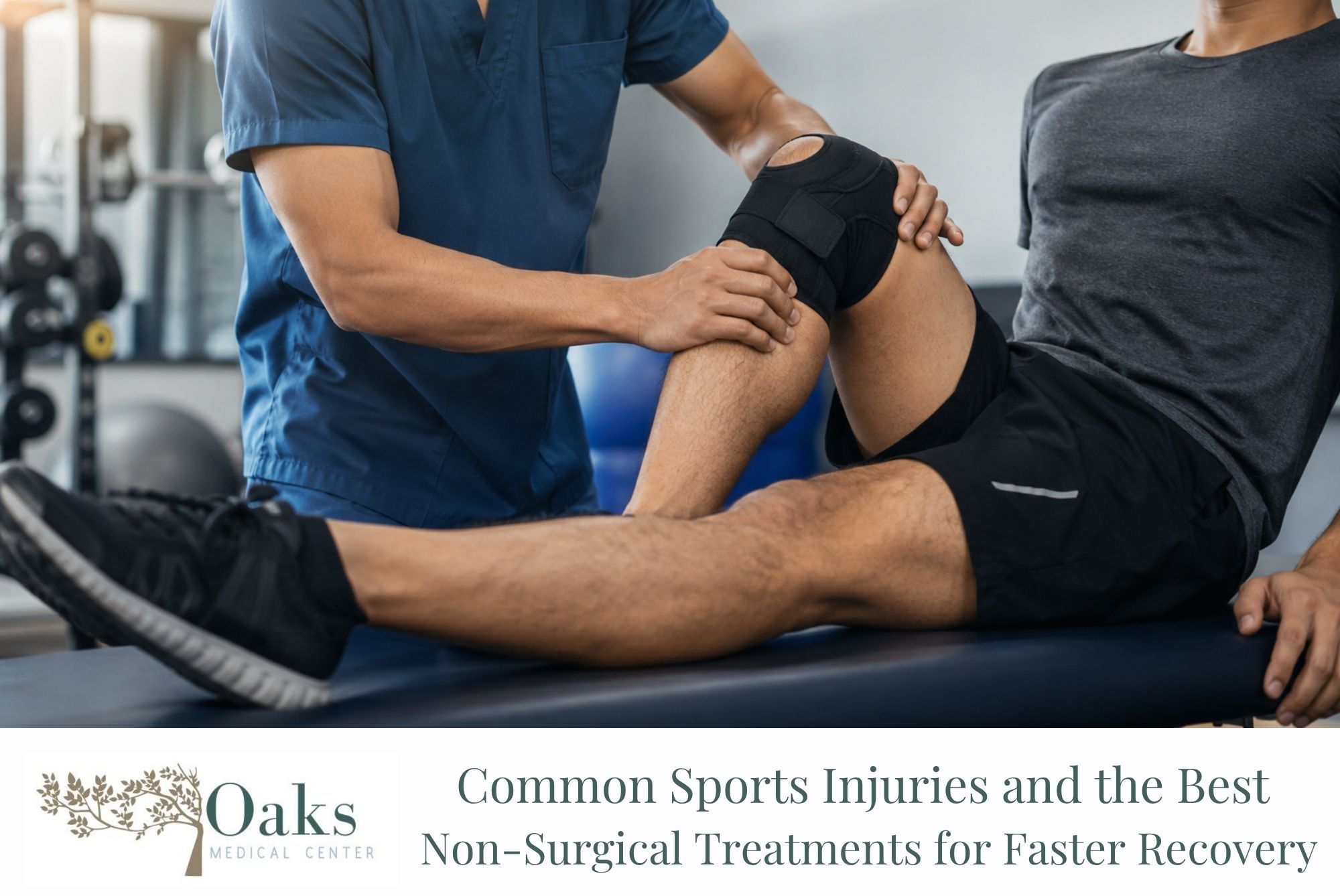
 Whether you’re a student athlete, weekend runner, gym enthusiast, or someone who enjoys staying active, sports injuries can happen when you least expect them. From sprained ankles and torn ligaments to chronic joint pain and overuse injuries, these conditions can interrupt your routine, reduce mobility, and impact your quality of life.
At Oaks Medical Center in Bryan, TX, our experienced sports medicine team focuses on helping patients recover safely and efficiently using advanced non-surgical treatments whenever possible. Understanding the most common sports injuries and knowing which conservative treatment options work best can help you get back to the activities you love faster and with less downtime.
Understanding Sports Injuries
Sports injuries typically occur due to overuse, improper technique, lack of conditioning, direct impact, or sudden trauma during physical activity. While some injuries require surgical intervention, many can be effectively treated through non-invasive and minimally invasive methods.
Early diagnosis and treatment are critical for preventing long-term complications and ensuring optimal recovery.
Most Common Sports Injuries
1. Sprains and Strains
Sprains involve stretched or torn ligaments, while strains affect muscles or tendons. These injuries commonly occur in the ankles, knees, hamstrings, and lower back.
Symptoms:
- Swelling
- Bruising
- Pain with movement
- Muscle weakness
- Limited mobility
Best Non-Surgical Treatments:
- Rest, ice, compression, and elevation (RICE)
- Physical therapy
- Bracing or taping
- Anti-inflammatory medications
- Regenerative therapies when appropriate
2. Tennis Elbow (Lateral Epicondylitis)
Despite the name, tennis elbow affects anyone who performs repetitive arm and wrist motions, including office workers, golfers, and weightlifters.
Symptoms:
- Elbow pain
- Weak grip strength
- Pain when lifting or gripping objects
Non-Surgical Treatment Options:
- Physical therapy
- Activity modification
- Corticosteroid injections
- Platelet-rich plasma (PRP) therapy
- Stretching and strengthening exercises
3. Runner’s Knee (Patellofemoral Pain Syndrome)
Runner’s knee causes pain around the kneecap and is common among runners, cyclists, and athletes who perform repetitive knee movements.
Symptoms:
- Knee pain during activity
- Clicking or popping sounds
- Pain when climbing stairs or squatting
Effective Conservative Treatments:
- Physical therapy
- Custom exercise programs
- Knee braces
- Orthotics
- Anti-inflammatory medications
4. Rotator Cuff Injuries
The rotator cuff consists of muscles and tendons that stabilize the shoulder. Overhead athletes, swimmers, and baseball players frequently experience these injuries.
Symptoms:
- Shoulder weakness
- Pain when lifting the arm
- Reduced range of motion
- Nighttime shoulder pain
Non-Surgical Treatments:
- Rehabilitation exercises
- Physical therapy
- Ultrasound-guided injections
- Activity modification
- Heat and cold therapy
5. ACL and Meniscus Injuries
Knee injuries involving the ACL or meniscus are common in sports requiring sudden pivoting or jumping.
While severe tears may require surgery, mild to moderate injuries often improve with conservative care.
Symptoms:
- Knee instability
- Swelling
- Popping sensation
- Difficulty walking
Non-Surgical Recovery Methods:
- Physical therapy
- Strength training
- Bracing
- Regenerative medicine therapies
- Guided rehabilitation programs
6. Shin Splints
Shin splints are caused by repetitive stress on the shinbone and surrounding tissues.
Symptoms:
- Lower leg pain
- Tenderness along the shin
- Pain during exercise
Treatment Options:
- Rest and activity modification
- Stretching exercises
- Supportive footwear
- Physical therapy
- Ice therapy
The Importance of Early Treatment
Ignoring sports injuries can lead to chronic pain, instability, reduced athletic performance, and long-term joint damage. Seeking prompt evaluation from a sports medicine specialist helps identify the injury early and allows for a customized treatment plan focused on healing and prevention.
At Oaks Medical Center, patients receive comprehensive evaluations designed to determine the root cause of pain and create individualized recovery strategies.
Advanced Non-Surgical Sports Medicine Treatments
Physical Therapy
Physical therapy is one of the most effective non-surgical treatments for sports injuries. It helps improve flexibility, strength, stability, and mobility while reducing the risk of reinjury.
Platelet-Rich Plasma (PRP) Therapy
PRP therapy uses the patient’s own blood platelets to promote natural healing in injured tissues. This innovative treatment may help accelerate recovery for tendon, ligament, and joint injuries.
Therapeutic Injections
Targeted injections can reduce inflammation, alleviate pain, and improve mobility in affected joints and soft tissues.
Rehabilitation and Strength Training
Customized rehabilitation programs help athletes rebuild strength safely while restoring proper movement patterns and preventing future injuries.
Bracing and Supportive Devices
Braces, taping techniques, and orthotics can stabilize injured areas and reduce strain during recovery.
Preventing Sports Injuries
Although not all injuries are avoidable, athletes can significantly reduce their risk by following proper injury prevention practices.
Tips for Injury Prevention:
- Warm up before exercise
- Stretch regularly
- Use proper technique
- Wear supportive footwear
- Increase activity intensity gradually
- Allow adequate recovery time
- Stay hydrated
- Strength train consistently
When to See a Sports Medicine Specialist
You should seek professional care if you experience:
- Persistent pain lasting more than a few days
- Swelling or bruising
- Joint instability
- Difficulty bearing weight
- Reduced range of motion
- Recurrent injuries
- Pain that worsens with activity
Early intervention often leads to faster healing and improved long-term outcomes.
Comprehensive Q&A Section
What is sports medicine?
Sports medicine is a specialized field focused on diagnosing, treating, rehabilitating, and preventing injuries related to physical activity and sports participation.
Can sports injuries heal without surgery?
Yes. Many sports injuries can be successfully treated with non-surgical methods such as physical therapy, injections, rehabilitation exercises, bracing, and regenerative medicine treatments.
How long does recovery from a sports injury take?
Recovery time depends on the severity of the injury, the treatment method, and the patient’s overall health. Minor injuries may heal in a few weeks, while more complex conditions can take several months.
What is PRP therapy?
Platelet-rich plasma (PRP) therapy uses concentrated platelets from your own blood to stimulate tissue repair and accelerate healing.
Is physical therapy necessary after a sports injury?
In many cases, yes. Physical therapy helps restore strength, flexibility, balance, and mobility while reducing the risk of reinjury.
What are the most common sports injuries?
Common sports injuries include:
- Sprains and strains
- ACL tears
- Rotator cuff injuries
- Tennis elbow
- Runner’s knee
- Shin splints
- Tendonitis
Can non-athletes benefit from sports medicine treatments?
Absolutely. Sports medicine specialists treat anyone experiencing musculoskeletal pain or injuries related to physical activity, exercise, or repetitive motion.
How can I prevent sports injuries?
Preventive strategies include warming up properly, stretching, maintaining strength and flexibility, using correct form, wearing proper equipment, and avoiding overtraining.
Should I continue exercising with an injury?
Continuing activity with an untreated injury can worsen the condition. It’s important to seek evaluation before returning to sports or exercise.
What should I do immediately after a sports injury?
Follow the RICE method:
- Rest
- Ice
- Compression
- Elevation
Then schedule an evaluation if symptoms persist or worsen.
Get Expert Sports Medicine Care at Oaks Medical Center
If you’re dealing with a sports injury or chronic joint pain, the experienced team at Oaks Medical Center is here to help. Our providers offer personalized, non-surgical treatment options designed to relieve pain, restore function, and help you return to your active lifestyle as safely and quickly as possible.
Contact Information
Oaks Medical Center
1313 Briarcrest Drive
Bryan, TX 77802
Phone: (979) 776-2828
Website: oaksmed.com
Appointments: https://oaksmed.com/appointments/